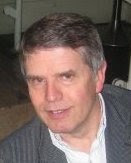
I have just finished reading the excellent The Reason for God by Tim Keller, which made no.7 in The New York Times' bestseller list in March 2008.
Tim Keller founded Redeemer Presbyterian Church in Manhattan, and 20 years on it has a congregation of 5,000. Named one of the Top 25 Most Influential Churches in America, Keller’s ministry is notable not only for winning over New Yorkers who are sceptical to faith, but also for its missional approach, planting more than 100 churches though the Redeemer Church Planting Center*. In an article entitled The Smart Shepherd, Newsweek refers to him a “C.S. Lewis for the 21st century”. It describes the setting in his church thus: There's nothing sexy here. There's no rock band, no drop-down theater-size video screen, no 100-member gospel choir—just a few chamber musicians and a couple of prayer leaders to help the congregation along in its hymns. The crowd at Redeemer Presbyterian is overwhelmingly young, single, professional and—for lack of a better word—sober.
The Newsweek article concludes with the following para:
Like so many New Yorkers, Keller is a misfit. He's a megachurch pastor who doesn't like megachurches. He's an orthodox Christian who believes in evolution. He emulates the Puritan preacher Jonathan Edwards and loves a good restaurant. He's an evangelist who relishes the power of doubt. New York is the perfect home for such an idiosyncratic Christian....
In The Reason for God Keller makes an intellectually compelling case for God and the Christian faith, drawing on material from literary classics, philosophy, anthropology and a multitude of other disciplines. In the first half of the book he addresses the 7 most common objections to Christianity that he has heard from many Manhattan sceptics:
1. There can’t be just one true religion
2. A good God could not allow suffering
3. Christianity is a straitjacket
4. The church is responsible for so much injustice
5. A loving God would not send people to hell
6. Science has disproved Christianity
7. You can’t take the Bible literally
In the second half he turns to an examination of seven reasons to believe in the claims of the Christian faith:
1. The clues of God
2. The knowledge of God
3. The problem of sin
4. Religion and the gospel
5. The (true) story of the cross
6. The reality of the resurrection
7. The dance of God
I commend the book to believers and sceptics alike. In the words of Tim Challies, author of a more comprehensive review: Believers will rejoice in a book that carefully and patiently answers the objections of their skeptical friends and does so with grace and in a way consistent with the Bible. Skeptics will see that even their skepticism is founded on some kind of faith and will be challenged to discern those underlying beliefs. May this book convince us all that we can believe and can believe reasonably, even in this age of skepticism.
* The Redeemer Church Planting Center site links to an interview with my friend Leonardo De Chirico, who relocated in 2009 from Northern Italy with his wife and family, in order to plant a like-minded church into central Rome. They moved from Ferrara, having planted a new church there - now led by my friend Paul Finch.
Friday, 1 January 2010


Friday, 18 December 2009
Decade Horribilis?
An insightful commentary on Britain over the last decade from Mark Greene, Executive Director of the London Institute for Contemporary Christianity. His version of the beatitudes is particularly incisive.
---------------------------------------------------------------------------------
Decade Horribilis
In December 1999, Britons voted John Lennon's 'Imagine' as the song of the millennium ? reflecting, perhaps, our tentative hope that the 21st century might herald a better world. It hasn't. A decade ago most of us hadn't heard of Al-Qaeda and had never lived through a financial meltdown that threatened the economy of the world. We now have. And the conditions and ideologies that led to them have certainly not been addressed.
Here in Britain, we now have the unhappiest children in the G20 (UNICEF) and the most miserable adults in Europe (WHO). And only 6.3% of us go to church monthly. I do not despair for the church - Jesus will build his church - I ache for our nation.
In Romans 1 Paul posits that the further a culture moves away from the truth about God the more decadent it becomes. In today's Britain:
So then we - prayerfully, humbly, determinedly, lovingly - can do no better than seek our Master's voice for how we are to live and share this life day by day, place by place with those we have been called to serve.
After all, on the threshold of a new decade, has anyone really got a better offer than Jesus' invitation: 'Come to me all ye...'?
Mark Greene
The London Institute for Contemporary Christianity
St Peter's, Vere St, London, W1G 0DQ (t) 020 7399 9555 mail@licc.org.uk
---------------------------------------------------------------------------------
Decade Horribilis
- Blessed are the brazen for they will be applauded.
- Blessed are the beautiful of body for they will be adored.
- Blessed are those who hunger and thirst for fame for theirs is the kingdom of Cowell.
- Blessed are the selfish and the individualists for their ends will justify their means. Blessed are those who don't strictly believe in anything for they can dance to any tune.
- Blessed are the drug-dealers, dream-weavers, make-over mavens and jingle-writers who help us forget our fractured hearts and our clipped wings and the echoing chasms of our souls.
Mark Greene
The London Institute for Contemporary Christianity
St Peter's, Vere St, London, W1G 0DQ (t) 020 7399 9555 mail@licc.org.uk
Thursday, 17 December 2009
Multi-site churches
Interesting USA Today article here re multi-site churches. It claims that 'Of the USA's 100 largest churches, 67% now have two or more sites and 60% of the 100 fastest-growing churches also have multiple sites.'
Tim Keller serves 4 already in New York, with plans for 6 more in the next 10 years. He argues in their favour: "The core of the multisite concept is that a church must 'reverse the flow.' Instead of drawing people to the church, take the church into their world."
Tim Keller serves 4 already in New York, with plans for 6 more in the next 10 years. He argues in their favour: "The core of the multisite concept is that a church must 'reverse the flow.' Instead of drawing people to the church, take the church into their world."
Good advice on how to take criticism
Tim Keller blogs here some great advice on how to handle criticism...
Some extracts:
'The biggest danger of receiving criticism is not to your reputation, but to your heart. You feel the injustice of it and feel sorry for yourself, and it tempts you to despise not only the critic, but the entire group of people from which they come.'
'...you should look to see if there is a kernel of truth in even the most exaggerated and unfair broadsides. There is usually such a kernel when the criticism comes from friends, and there is often such truth when the disapproval comes from people who actually know you.'
Some extracts:
'The biggest danger of receiving criticism is not to your reputation, but to your heart. You feel the injustice of it and feel sorry for yourself, and it tempts you to despise not only the critic, but the entire group of people from which they come.'
'...you should look to see if there is a kernel of truth in even the most exaggerated and unfair broadsides. There is usually such a kernel when the criticism comes from friends, and there is often such truth when the disapproval comes from people who actually know you.'
Tuesday, 8 December 2009
The Prosperity Gospel and the Financial Crisis
An interesting item in 'The Christian Post' discusses a recent article in December's issue of The Atlantic entitled 'Did Christianity Cause the Crash?' Hanna Rosin suggests that a vast and growing sector of the church demonstrably played a part in the part of the crash we know as the “sub-prime mortgage” scandal and the “foreclosure follow-up”. She argues that sub-prime mortgages were sold especially into and through many poor Latino and African-American congregations - the same churches who were being led by pastors (or Bishops or Apostles!) who teach a 'prosperity gospel'.
Many of the terms and concepts used by prosperity preachers today date back to Oral Roberts, a poor farmer’s son turned Pentecostal preacher. Roberts developed his famous concept of seed faith, still popular today. If people would donate money to his ministry, a “seed” offered to God, he’d say, then God would multiply it a hundredfold. Of the USA's 12 largest churches, the article suggests, three teach prosperity—Joel Osteen’s, which dwarfs all the other megachurches; Tommy Barnett’s in Phoenix; and TD Jakes’ in Dallas. In second-tier churches—those with about 5,000 members—the prosperity gospel is said to dominate: overall 50 of the largest 260 churches in the US teach prosperity. The doctrine has become popular with Americans of every background and ethnicity...
However many church leaders in the US take a diametrically opposite view, eg:
John Piper, very forthrightly, in this video.
Rick Warren, senior pastor of Saddleback Community Church and author of various bestsellers including 'The Purpose Driven Life: “This idea that God wants everybody to be wealthy? There is a word for that: baloney. It’s creating a false idol. You don’t measure your self-worth by your net worth. I can show you millions of faithful followers of Christ who live in poverty. Why isn’t everyone in the church a millionaire?”
Many of the terms and concepts used by prosperity preachers today date back to Oral Roberts, a poor farmer’s son turned Pentecostal preacher. Roberts developed his famous concept of seed faith, still popular today. If people would donate money to his ministry, a “seed” offered to God, he’d say, then God would multiply it a hundredfold. Of the USA's 12 largest churches, the article suggests, three teach prosperity—Joel Osteen’s, which dwarfs all the other megachurches; Tommy Barnett’s in Phoenix; and TD Jakes’ in Dallas. In second-tier churches—those with about 5,000 members—the prosperity gospel is said to dominate: overall 50 of the largest 260 churches in the US teach prosperity. The doctrine has become popular with Americans of every background and ethnicity...
However many church leaders in the US take a diametrically opposite view, eg:
John Piper, very forthrightly, in this video.
Rick Warren, senior pastor of Saddleback Community Church and author of various bestsellers including 'The Purpose Driven Life: “This idea that God wants everybody to be wealthy? There is a word for that: baloney. It’s creating a false idol. You don’t measure your self-worth by your net worth. I can show you millions of faithful followers of Christ who live in poverty. Why isn’t everyone in the church a millionaire?”
Saturday, 5 December 2009
Bats in the belfry and pennies from heaven?
It's been an interesting few weeks in the progress towards our new church/community centre building...
Having applied for Planning Permission a couple of months ago, and perhaps surprisingly had no opposition from our (residential) neighbours, we were all set for the Planning Committee to consider our application on 10 Dec, until the Council's Ecology Unit sprung into life 9 days ago, having decided to require a bat survey of the site!

Our Architects responded remarkably quickly, with the outcome that less than a week later, the Council's recommended 'bat consultant' had carried out a survey and reported that there was no evidence of bats, and furthermore for various reasons the buildings and the trees were very unlikely to host bats! So we're hopefully back on track a month later for the January Planning Committee.

We're also coming up to the fifth Sunday when we're asking our congregation to bring their pledges towards a target of £850K - having already given £650K, and in the context of a total project cost of around £4M. As at yesterday those pledges had reached £295K, so it will be interesting to see how we do tomorrow morning where the balance is concerned! But given that less than a quarter of the church has pledged so far, the target looks within reach...
Having applied for Planning Permission a couple of months ago, and perhaps surprisingly had no opposition from our (residential) neighbours, we were all set for the Planning Committee to consider our application on 10 Dec, until the Council's Ecology Unit sprung into life 9 days ago, having decided to require a bat survey of the site!

Our Architects responded remarkably quickly, with the outcome that less than a week later, the Council's recommended 'bat consultant' had carried out a survey and reported that there was no evidence of bats, and furthermore for various reasons the buildings and the trees were very unlikely to host bats! So we're hopefully back on track a month later for the January Planning Committee.

Friday, 4 December 2009
Nestlé surrender to STOP THE TRAFFIK pressure
From: Bex Keer [mailto:Bex.Keer@stopthetraffik.org]
Sent: 04 December 2009 14:03
To: undisclosed-recipients:
Subject: Nestlé surrender to STOP THE TRAFFIK pressure
Christmas has come early!
Thank you to all those who are part of the STOP THE TRAFFIK chocolate campaign. On Sunday could you take the opportunity to announce the exciting developments that ….
Nestlé surrender to STOP THE TRAFFIK pressure
On Monday morning (December 7th) chocolate giant Nestlé UK will finally announce that Kit Kat is to be slave free or fairly traded from January 2010. But this good news is only partial. This is amazing news. But remember although Nestlé have bowed to pressure from the STOP THE TRAFFIK campaign to clean up their act, they will also announce that this will only apply to their ‘four finger’ product. In other words, two finger Kit Kats and all of their other chocolate products will continue to exploit the chocolate slaves of the Ivory Coast from where Nestlé source most of their cocoa.
Over the last few years thousands of churches and their members have put pressure on the big chocolate manufacturers around the world to eradicate the worst forms of child labour on the cocoa farms of Ivory Coast, West Africa where thousands of young children are trafficked, enslaved and abused to harvest the cocoa that makes over a third of the world’s chocolate.
First Cadbury, then MARS, now Nestle.
Since summer 2009 STOP THE TRAFFIK has turned the heat up on Nestlé – a global giant with a poor human rights record – and in recent weeks has launched a new and hard-hitting Christmas campaign designed to bring the giant company to task.
STOP THE TRAFFIK has learnt that from January 2010 the four finger Kit Kats will be fair trade and that this will be made public on Monday. However, Nestlé still refuse to budge on their two finger biscuits.
Steve Chalke, founder of STOP THE TRAFFIK and the United Nations Special Advisor on Community Action Against Human Trafficking says “We welcome the Nestlé announcement. We are relieved for the cocoa farmers and children in Ivory Coast. The surrender of Nestlé demonstrates that by making a simple consumer choice ordinary people can hold multi-nationals to account.”
But, he adds “Though we understand that it is hard to make all products ethical overnight, we want to see that this is more than a token gesture. So, we intend to keep the pressure on Nestlé until their commitment is global and product wide, like their competitor Mars. No chocolate should have the bitter aftertaste of slavery. Therefore our campaign continues.”
PLEASE ANNOUNCE THIS TO ENCOURAGE AND THANK ALL THOSE WHO HAVE HELPED MAKE THIS HAPPEN AND AS A CALL TO ACTION.
Ruth Dearnley CEO STOP THE TRAFFIK "This is only the beginning. The worst thing we can do is think that this is enough. This is a sign that our campaign is working but the chocolate industry needs to know that we will not stop until every bar on every shelf in every shop is traffik free. Because only then can we know that we are stopping the trafficking of young boys to pick the beans to feed us our sweet snack. Thank you for all you are doing. Be encouraged and be inspired. We will stop the traffik"
This e-mail has been sent by Bex Keer, STOP THE TRAFFIK UK Team Manager
t: 020 7921 4250 f: 020 7921 4201
STOP THE TRAFFIK, 75 Westminster Bridge Road, London, SE1 7HS
Sent: 04 December 2009 14:03
To: undisclosed-recipients:
Subject: Nestlé surrender to STOP THE TRAFFIK pressure
Christmas has come early!
Thank you to all those who are part of the STOP THE TRAFFIK chocolate campaign. On Sunday could you take the opportunity to announce the exciting developments that ….
Nestlé surrender to STOP THE TRAFFIK pressure
On Monday morning (December 7th) chocolate giant Nestlé UK will finally announce that Kit Kat is to be slave free or fairly traded from January 2010. But this good news is only partial. This is amazing news. But remember although Nestlé have bowed to pressure from the STOP THE TRAFFIK campaign to clean up their act, they will also announce that this will only apply to their ‘four finger’ product. In other words, two finger Kit Kats and all of their other chocolate products will continue to exploit the chocolate slaves of the Ivory Coast from where Nestlé source most of their cocoa.
Over the last few years thousands of churches and their members have put pressure on the big chocolate manufacturers around the world to eradicate the worst forms of child labour on the cocoa farms of Ivory Coast, West Africa where thousands of young children are trafficked, enslaved and abused to harvest the cocoa that makes over a third of the world’s chocolate.
First Cadbury, then MARS, now Nestle.
Since summer 2009 STOP THE TRAFFIK has turned the heat up on Nestlé – a global giant with a poor human rights record – and in recent weeks has launched a new and hard-hitting Christmas campaign designed to bring the giant company to task.
STOP THE TRAFFIK has learnt that from January 2010 the four finger Kit Kats will be fair trade and that this will be made public on Monday. However, Nestlé still refuse to budge on their two finger biscuits.
Steve Chalke, founder of STOP THE TRAFFIK and the United Nations Special Advisor on Community Action Against Human Trafficking says “We welcome the Nestlé announcement. We are relieved for the cocoa farmers and children in Ivory Coast. The surrender of Nestlé demonstrates that by making a simple consumer choice ordinary people can hold multi-nationals to account.”
But, he adds “Though we understand that it is hard to make all products ethical overnight, we want to see that this is more than a token gesture. So, we intend to keep the pressure on Nestlé until their commitment is global and product wide, like their competitor Mars. No chocolate should have the bitter aftertaste of slavery. Therefore our campaign continues.”
PLEASE ANNOUNCE THIS TO ENCOURAGE AND THANK ALL THOSE WHO HAVE HELPED MAKE THIS HAPPEN AND AS A CALL TO ACTION.
Ruth Dearnley CEO STOP THE TRAFFIK "This is only the beginning. The worst thing we can do is think that this is enough. This is a sign that our campaign is working but the chocolate industry needs to know that we will not stop until every bar on every shelf in every shop is traffik free. Because only then can we know that we are stopping the trafficking of young boys to pick the beans to feed us our sweet snack. Thank you for all you are doing. Be encouraged and be inspired. We will stop the traffik"
This e-mail has been sent by Bex Keer, STOP THE TRAFFIK UK Team Manager
t: 020 7921 4250 f: 020 7921 4201
STOP THE TRAFFIK, 75 Westminster Bridge Road, London, SE1 7HS
Subscribe to:
Posts (Atom)

 Posts
Posts